Cypress Perspectives

Storm damage by lakeside with palm trees and debris.
Hurricane Prep List
Hurricane preparedness checklist by Cypress Bank & Trust.

Preparing for hurricane season goes beyond stocking up on water and batteries. It’s also about protecting your financial well-being. From securing important documents to reviewing your insurance coverage and ensuring access to emergency funds, every step plays a role in keeping you prepared and resilient.

We’ve put together a straightforward disaster preparedness checklist to help you feel confident before a storm is even on the radar. It’s designed to give you peace of mind, knowing you’ve covered not just the basics, but the financial essentials too.

Download your copy and stay prepared for whatever this season brings: Hurricane Checklist

Fluffy brown dog resting on a couch
Protecting Your Pets When You Can’t Be There

Understanding Pet Trusts: Protecting Your Pets When You Can’t Be There

For many families, pets are more than companions; they are cherished members of the household. We carefully plan for our children, our businesses, and our legacy, but often overlook what would happen to our pets if we were no longer able to care for them. A pet trust provides peace of mind, ensuring your animals are looked after according to your wishes, no matter what life brings.

What Is a Pet Trust?

A pet trust is an arrangement that allows you to set aside funds and provide clear instructions for your pets’ care in the event of your death or incapacity. Unlike a simple verbal promise to a family member or friend, a pet trust creates an obligation for your chosen caregiver.

In most states, including Florida, pet trusts are even recognized under state law giving you confidence that your wishes will be respected.

Why a Pet Trust Instead of a Will?

Many assume they can simply name a pet in their Will but pets are considered personal property, which means you cannot directly leave assets to them. Therefore, your Will can transfer ownership of your pet to another person, but it doesn’t provide ongoing funds or guidance for their care.

In addition, a Trust can be active during your lifetime if you become incapacitated, unlike a Will, which only applies after death.

Key Roles in a Pet Trust

When creating a pet trust, you’ll appoint three essential roles:

  • The Beneficiary: Your pet or pets.
  • The Caregiver: The trusted person who provides day-to-day care.
  • The Trustee: An individual or institution who manages funds and ensures they’re used as intended.

These roles can be filled by family, friends, or professional trustees, and many people choose backups to ensure long-term protection.

What Expenses Can a Pet Trust Cover?

A pet trust can be as simple or as detailed as you want, covering every aspect of your pet’s needs. Typical expenses include food, treats, and supplies, along with regular veterinary visits and emergency medical care. You can also include grooming services, boarding costs, and pet insurance premiums.

Many families go beyond the basics to cover the comforts their companions are accustomed to such as special toys, bedding, or other personal touches that make their lives joyful. A thoughtful plan may even extend to end-of-life care, ensuring those moments are handled with dignity and compassion.

How Much Should You Fund a Pet Trust?

The right amount will depend on your pet’s type, lifespan, and expected care. Cats and dogs may need 10–20 years of support, while horses and parrots can live much longer and often require higher costs of care.

A common approach is to calculate annual expenses, multiply them by your pet’s expected lifespan, and add a cushion for unexpected needs. Working with an estate planning professional ensures your trust is properly funded while still balancing the needs of your other beneficiaries.

Flexibility and Oversight

Pet Trusts are flexible tools that can be designed to fit your exact wishes. You can specify how leftover funds should be distributed after your pet passes, appoint a “trust protector” to oversee the trustee, or even provide a stipend to the caregiver in recognition of their dedication.

By setting clear oversight, you protect against misuse and provide your pets with the stability and loving care they deserve.

The Legal Landscape of Pet Trusts

All 50 states now recognize pet trusts in some form, though the details vary. In Florida, a pet trust can last for the lifetime of the pet, and courts will enforce its terms as written. If the funding is considered unreasonably high, courts may adjust it to a reasonable level.

This makes it especially important to work with an attorney experienced in state law, so your trust remains valid and enforceable.

Pet Trusts as Part of a Larger Plan

A pet trust should be part of your larger estate plan, alongside wills, living trusts, and powers of attorney. Many families also choose a professional trustee, such as a bank or trust company, for additional peace of mind. With professional oversight, you can feel confident that funds will be managed responsibly and that your pet’s needs remain a priority.

Let’s Chat About Your Pet’s Future

At Cypress Bank & Trust, we understand that planning for your future (and your pets’ future) comes with a mix of love, responsibility, and sometimes tough decisions. You don’t have to navigate it alone. Our team is here to listen to your story, guide you through your options, and help create a plan that brings you confidence and peace of mind. Whether it’s protecting your family, your business, or your beloved companions, we’re ready to walk alongside you every step of the way.

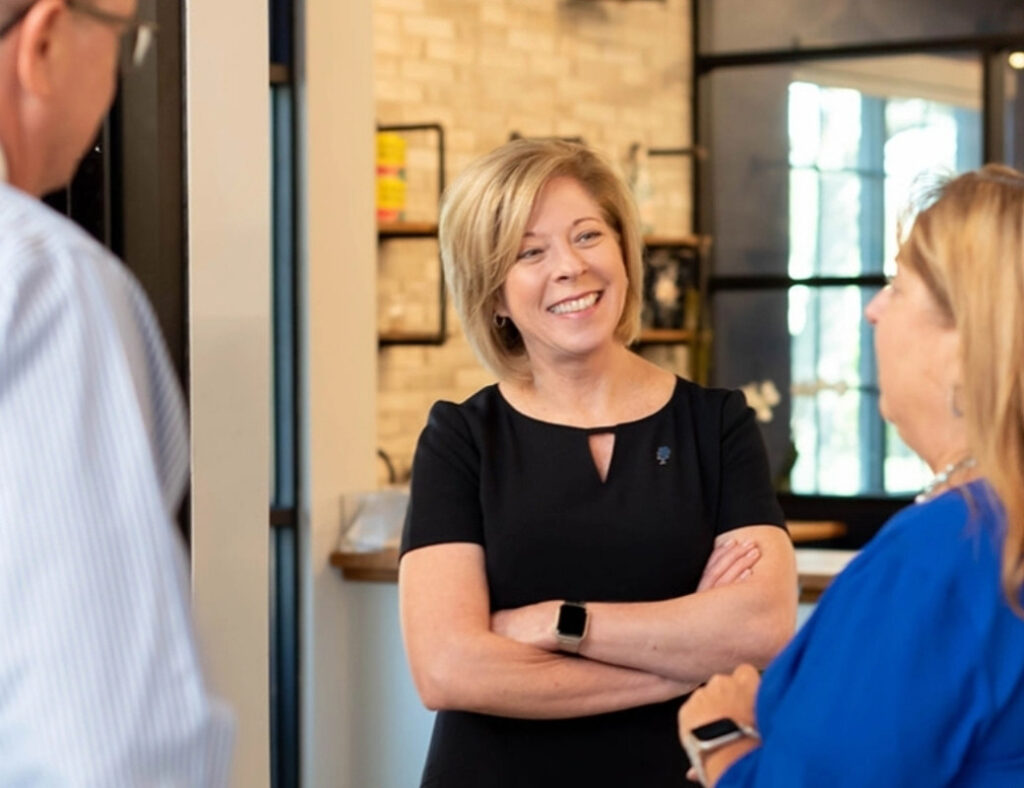
Smiling woman talking with two people at event.
Introduction to Trusts

Click HERE for your Introduction to Trusts today!

Businessman writing notes during meeting.
A Memo to My Younger Self – Sascha Rizza, CFA, CFP

As I look back on my 30-year career in the investment business I think back to the many things that I have learned along the way and considered what advice I would like to give myself 30 years ago.  Avoiding the fantastical suggestions like put every penny I had in Apple stock in 1997 when it was $0.16 a share or betting on the New York Giants beating the undefeated New England Patriots in Super Bowl 42, I decided to offer some simple lessons that have served me well and I believe will continue to serve investors well into the future. 

So here is my version of the Magnificent Seven: 

  1. A slow dollar is better than a quick nickel or put another way getting rich slowly is infinitely better than going broke quickly.   

For whatever reason we treat investing like it is a sprint when in reality it is a long marathon.  Maybe as a result of the 24-hour financial news available to us or quite possibly some of the so called “advances” that we have made to investing over the last 30 years it appears that we have become rather short sighted in our investment approach.  I would recommend the opposite, as investors we should be less concerned about next earnings and more concerned about the longer-term prospects of the investments we allocate capital towards.  According to Albert Einstein, “Compound interest is the eighth wonder of the world.  He who understands it, earns it …he who doesn’t…pays it.”  

2. Good corporate management should be treasured, and bad corporate management should be avoided.  

The road to perdition is paved with bad corporate managers who have taken otherwise viable (and sometimes pristine) corporate institutions and destroyed untold amounts of shareholder wealth.  Many times, they have enriched themselves at the expense of their shareholders but when you happen upon truly good corporate management you should invest accordingly.  The challenging part is discerning the difference between good and bad managers since often times today’s media darlings are tomorrow’s villains and scoundrels.  A reasonable dose of cynicism might serve you well. 

3. Cash is always better than a check. 

There have been many pages written about the “next great thing” or how a company’s earnings will grow dramatically at some future date.  Remember that cash today is infinitely better than a check tomorrow.  As such earnings (or more specifically real cash flow) are of paramount importance when looking for potential investments.  Keep in mind that for every “next great thing” that does come to pass there are probably at least 10 times that amount that have been confined to the dustbin of history. 

4. Avoid the big loss. 

This is easier said than done.  You never want to hold or sell a position based purely on what you paid for it versus what the current value is.  In this way you will need to be able to discern when you should exit a position rather than increasing your position when the price action has gone against you.  Sound analysis will help you in these situations, but the best advice is probably from Mark Twain who said “It ain’t what you don’t know that gets you in trouble.  It’s what you know for sure that just ain’t so”.  So be skeptical of even your own analysis and assumptions. 

5. It is better to build a portfolio than trade a portfolio. 

Although this might seem like a very antiquated notion especially with the virtual elimination of trading costs compared to what they used to be, when I look at the Hall of Fame of Great Investors there are almost exclusively comprised of individuals who built portfolios over time as opposed to people who constantly traded positions without holding on for the long term.  Keep in mind that wealth is built over time not overnight. 

6. Valuations are a terrible timing device but are critically important in determining future returns. 

Unless you can make the same trade with the guy who sold Jack the magic beans that grew the into the beanstalk you would be well advised to evaluate the relative valuation of your potential investment.  This doesn’t mean that overvalued investments can’t become more overvalued but the probability of them returning to a more normal valuation is generally equal to that of undervalued investments returning to normal valuation.  As Benjamin Graham stated long ago “In the short run, the market is a voting machine but in the long run, it is a weighing machine”.  The forces of economic gravity are long and variable, but they are also immutable. 

7. Patience will be your greatest asset and the hardest one to acquire. 

Even if you master the first six steps that I have outlined patience is the most challenging aspect of investing.  Many times you will feel the need to act even though often times inaction will be the correct path.  You will need to allow time to pass so that the investment field that you have planted has a chance to grow.  To that end I would suggest the following advice from the wise philosopher Winnie the Pooh who said, “Sometimes I sits and thinks and sometimes I just sits”. 

Happy investing. 

Sascha Rizzo, CFA, CFP

Senior Portfolio Manager/Market Executive and Senior Vice President

*Trust and Portfolio Management services offered by Cypress Bank & Trust are not insured by the FDIC; are not deposits, are not guaranteed, and are subject to investment risks, including possible loss of the principal invested.

*This article was prepared by Sascha Rizzo. Opinions expressed in this article are the author’s own and do not reflect the view of Cypress Bank and Trust.

Person using laptop with Cypress Bank mug
Positive Pay to Prevent Fraud

Fraud prevention is a top priority for businesses in today’s digital landscape. That’s why Cypress Bank & Trust is proud to offer an exceptional solution: Positive Pay. Our Positive Pay feature, available through our Digital Banking platform, empowers business users to set and manage controls, providing an added layer of protection against fraudulent activities.

With Positive Pay, you can rest easy knowing that both bank-entered and user-entered blocks or filters combine to create a central display and transaction reference point. This synchronization ensures that no matter who enters the data, it works together seamlessly to safeguard your valuable business accounts.

Managing filters on your accounts has never been easier. Simply navigate to the Positive Pay section within our Digital Banking menu, where you’ll find controls for both check positive pay and ACH positive pay. The Filters section allows you to conveniently view and manage enabled accounts, giving you full control over your transactions.

Within the Positive Pay controls, you can access detailed information about your accounts, including transactions and associated lists. Customize your experience by adding, editing, or removing email addresses for receiving notifications from our Positive Pay service.

Stay on top of your business transactions with ease. The Transactions section enables you to review exception items, while the Review History section displays your previous decisions made within our Digital platform. You’ll have a comprehensive overview of your activity at your fingertips.

And that’s not all! Our Lists feature allows you to establish an Allow List, Block List, or Watch List for your accounts. Transactions matching the Allow List are automatically processed, while those matching the Block List are rejected. Transactions on the Watch List trigger email notifications, ensuring you’re promptly alerted to any potential risks.

At Cypress, we understand the importance of protecting your business from financial fraud. That’s why we’ve implemented Positive Pay as an added value feature within our Digital Banking platform. With Positive Pay, you can proactively manage controls and safeguard your accounts against fraudulent activities.

Scroll to Top

New Vero Beach
Office Hours

Effective Monday, May 11, 2026, the Cypress Bank & Trust Vero Beach office located at 4625 N. A1A, Suite 2, Vero Beach, Florida 32963 will operate under the hours outlined below.

Hours of Operation
Monday through Friday, 9:00 a.m. to 5:00 p.m.

Bank Hours – Lobby
Monday through Friday, 1:00 p.m. to 5:00 p.m.